EPR in the US: Why Packaging Choices are Becoming a Bigger Business Decision
EPR in the US: Why Packaging Choices are Becoming a Bigger Business Decision
The packaging regulatory landscape in the United States is changing quickly. Extended Producer Responsibility, or EPR, is shifting more of the cost and accountability for packaging recovery from municipalities to the companies that place packaging on the market. For brands, that means packaging design is no longer just an operational efficiency, sustainability or customer experience question. It’s increasingly a compliance, data and cost-management issue too.
What is EPR and why is it being implemented?
EPR is a policy approach that makes producers financially and operationally responsible for the packaging they sell after it has been used. In practice, producers typically register with a producer responsibility organization, report packaging volumes and materials placed on the market, and pay fees that help fund collection, sorting, recycling infrastructure, education and administration.
The aim is to improve recycling outcomes by connecting packaging design more directly to end-of-life costs. Materials that are easier to identify, sort and recycle generally attract lower fees, while materials that are harder to recover, more likely to contaminate recycling streams or less widely accepted may carry higher costs. This creates a financial incentive for brands to design packaging that works better in recycling systems.
How is EPR working in the US?
Unlike some regions with national packaging frameworks, in the U.S. EPR is developing state by state. As of 2026, seven states have enacted packaging EPR laws: California, Colorado, Maine, Maryland, Minnesota, Oregon and Washington. Oregon and Colorado are among the first programs to move into producer fee collection, while other states are progressing through rulemaking, program planning, registration, reporting and implementation milestones.
Several other states are actively exploring packaging EPR through bills, studies or needs assessments. For national brands, this creates a patchwork of obligations that may differ by state, including which materials are covered, how producers are defined, what data must be reported, when fees apply and how those fees are calculated.
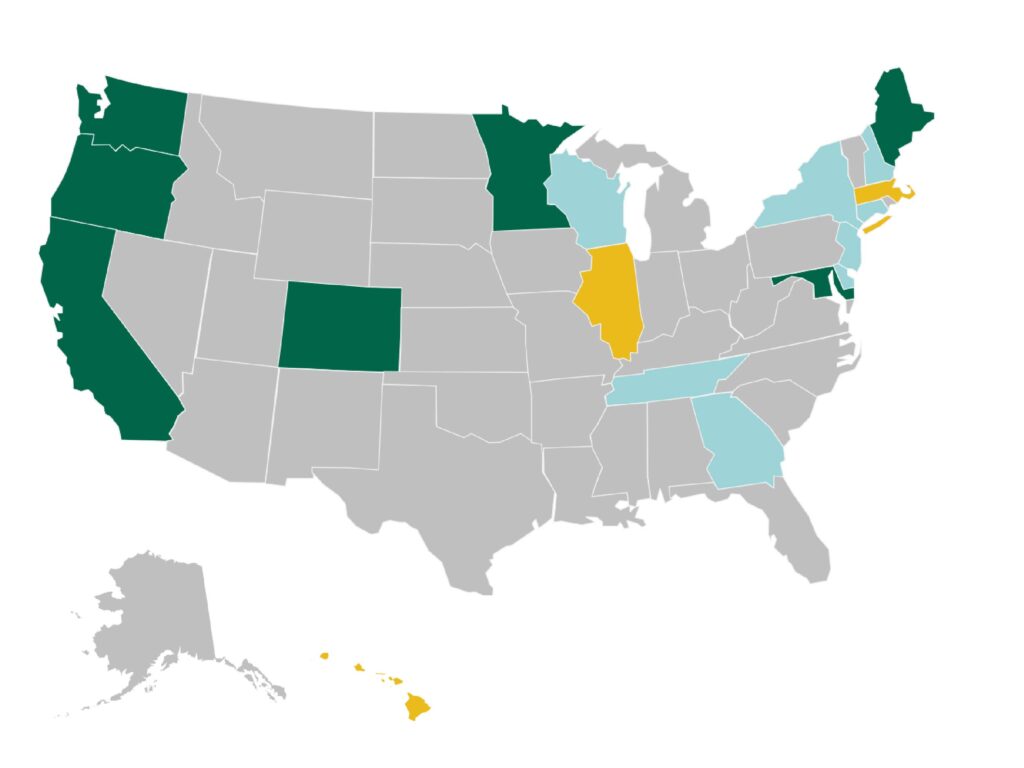
Dark green: EPR in implementation phase. Orange: Needs assessment underway. Blue: Bill introduced for 2026.
Example 2006 material fees
| Colorado | Oregon | |||
| Paperboard | 8.0 ¢/lb. | 8.0 ¢/lb. | ||
| PET Thermoformed Containers, Cups, Plates, Trays | 57.0 ¢/lb. | 57.0 ¢/lb. | ||
| Other/Mixed Rigid Plastic | 78 ¢/lb. | 97 ¢/lb. | ||
| Flexible Plastic | 48 ¢/lb. | 43 ¢/lb. |
As a general principle, fee structures tend to reflect the cost and complexity of recovering a material. Fiber-based packaging, such as paperboard, is often positioned favorably because it is widely understood to be recyclable by consumers and widely collected within existing recycling systems. Plastics can face higher fees where sorting, contamination, limited end markets, resin color, format complexity or recyclability limitations increase system costs.
What challenges is EPR posing to brands?
For many brands, the first challenge is data. EPR requires companies to understand exactly what packaging they place on the market, where it is sold, what each component is made from and how much it weighs. For large portfolios, that means gathering accurate packaging data across SKUs, suppliers, regions and business units, then mapping it to different state reporting categories.
The second challenge is cost exposure. EPR turns packaging end-of-life into a visible line item, and those costs may vary significantly by material and state. Brands need to forecast fee impacts, identify high-cost packaging formats and decide whether redesign, material Changes or lightweighting could reduce long-term exposure.
The third challenge is timing. Regulations are evolving quickly, and producers may have to make design, procurement and compliance decisions before every implementation detail is finalized. That puts pressure on packaging, legal, sustainability, finance and procurement teams to work together earlier and more closely than before.
Additional complexity: California SB 54 and New Jersey recycled content law
California’s SB 54 is one of the most significant packaging EPR laws in the US. It establishes an EPR program for single-use packaging and plastic foodservice packaging, with producer registration, reporting and fee obligations, as well as long-term performance targets. By 2032, covered packaging must be reusable, recyclable or compostable, alongside targets for plastic reduction and recovery rates.
For many brands, SB 54 adds a strategic packaging design challenge. It is not only about paying fees; it is about demonstrating progress against material reductions, recyclability, compostability and reporting requirements. California’s wider packaging rules, including recyclability labelling restrictions, may also require brands to review on-pack symbols and claims to help ensure compliance.
Key requirements:
- By 2032, packaging must support 100% reusable, recyclable or compostable outcomes and claims
- 65% recycling target for covered single-use plastic packaging and foodservice packaging by 2032
- 25% reduction in single-use plastic packaging compared with 2023 baseline.
New Jersey’s recycled content law creates a different, but related, pressure point. The law sets post-consumer recycled (PCR) content requirements for certain regulated containers and packaging products sold or offered for sale in New Jersey, including rigid plastic containers, plastic beverage containers, glass containers, paper and plastic carryout bags, and plastic trash bags. Rigid plastic containers must contain 10% PCR starting in 2024, increasing by 10 percentage points every 3 years until reaching 50%.
For rigid plastic containers and other regulated formats, this may create practical sourcing challenges, especially where for example, pharmaceutical-grade post-consumer recycled material is limited, costly or difficult to qualify. Non-compliance can also carry significant financial penalties, making recycled content strategy a commercial and legal consideration as well as a sustainability priority.
How paperboard packaging can help
As brands respond to EPR and recycled content requirements, paperboard packaging can play two important roles: helping reduce reliance on plastic formats and helping optimize existing fiber-based packaging to reduce material use and associated fees.
Where a plastic format may carry higher EPR exposure, recycled content requirements, labelling complexity or end-of-life challenges, a paperboard alternative may help simplify the packaging proposition. Paperboard is familiar to consumers, widely collected in many systems and can offer strong printability for clear, compliant communication. For some applications, moving from plastic to paperboard may also support brand sustainability goals while helping to reduce fee exposure over time.
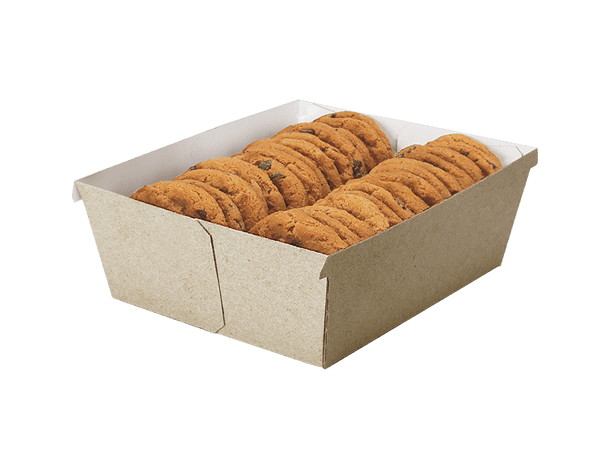
Case study: Cookie Trays
For customers looking to move from a plastic tray or insert to a paperboard insert for their packaging, TrayArray™ can provide meaningful EPR savings while also being a drop-in solution in automated lines.
Based on Oregon’s fee structure for 200 million units, TrayArray™ could save over $2 million in EPR fees versus a thermoformed plastic insert.
Potential saving: $2 million on 200 million units
Case study: Rigid Canisters
Boardio™ is a rigid paperboard canister designed for a wide range of applications, from coffee to confectionery and protein powder to infant formula.
Based on Oregon’s fee structure, it has the potential to save customers over $3.5 million in EPR fees across 50 million units versus a rigid plastic can.
Potential saving: $3.5 million on 50 million units

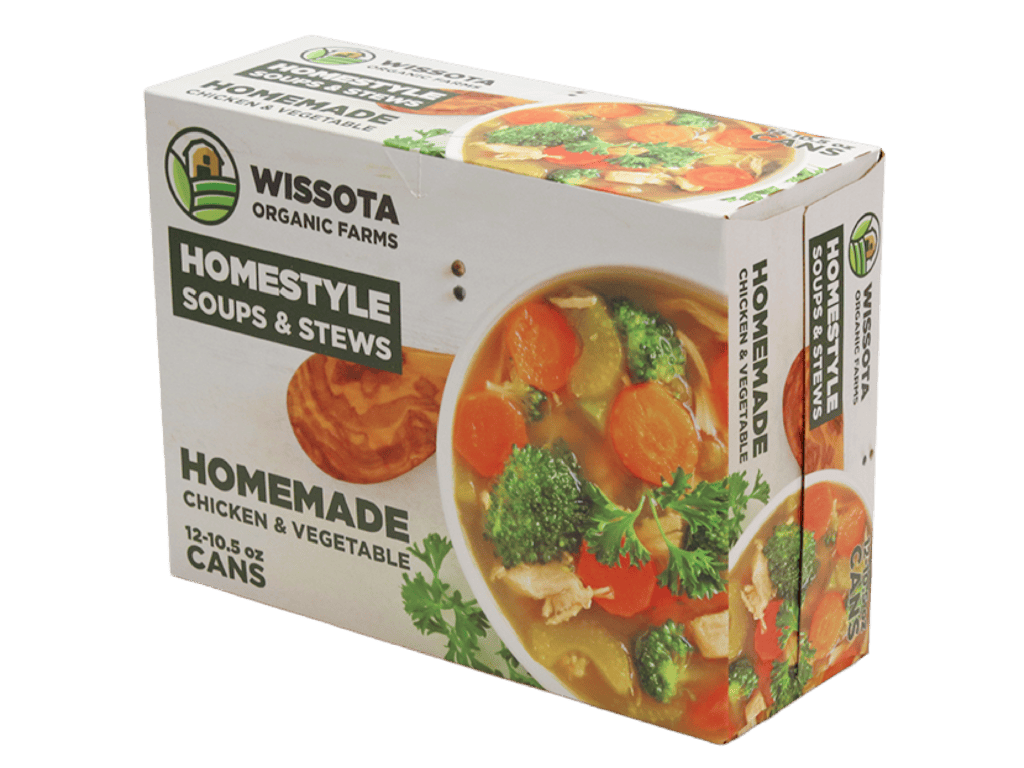
Case study: Fully Enclosed Carton for Cans
Paperboard is a flexible, effective and more circular alternative to shrink film for can multipacks.
Based on Oregon’s fee schedule, moving from shrink film for a 6-pack of food cans to a fully enclosed carton can deliver potential EPR savings of around $213,000 for 5 million units.
Potential saving: $213k on 5 million units
Ready to explore your options?
As EPR requirements evolve, now is the time to review your packaging portfolio and identify where paperboard could help reduce complexity, support recyclability goals, and strengthen total value. Speak to our team to explore packaging solutions designed for today’s market and tightening recycling requirements.
Related Resources
eBook
Adapting to Canada’s Single-Use Plastics Ban: A Guide to Evaluating Alternative Packaging Solutions
June 26, 2023
Learn more about the scope of Canada’s SUPPR and let us help you evaluate alternatives to single-use plastic packaging.
eBook
Unwrapping PPWR Legislation: What’s Next for Food Packaging?
August 26, 2026
Discover how our Better by Design framework helps create packaging that improves circularity, functionality, and convenience while reducing environmental impact across the value chain.
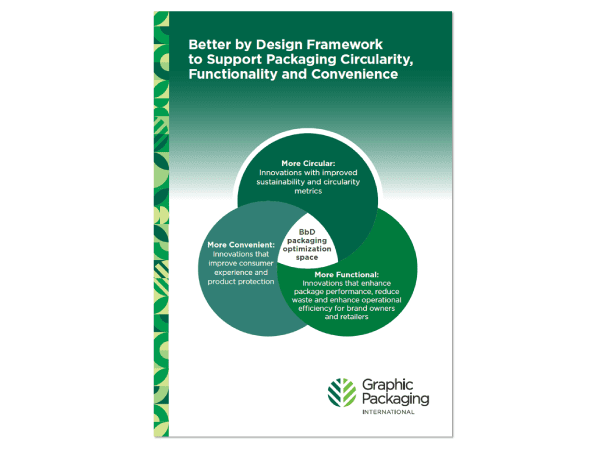
eBook
The Better by Design Framework: Supporting Packaging Circularity, Functionality and Convenience
May 18, 2026
Discover how our Better by Design framework helps create packaging that improves circularity, functionality, and convenience while reducing environmental impact across the value chain.