CULTURE WAVE
Good Enough for Us: How Human Standards Have Redefined Pet Care
May 21, 2026
As our relationship with pets has evolved, so have the products we trust – and their packaging
01
The bond between humans and animals is ancient.
Long before the idea of a “pet” existed, people partnered with animals for survival — and, at times, companionship. Over time, those relationships evolved, setting the stage for modern pet care.
From Wild to Well-Cared-For: A Pet Evolution Timeline
Early Domestication
- 38,000-12,000 B.C. First domesticated animal in East Asia: the dog
- 12,000-11,000 B.C. Earliest evidence of pet burials
- 3,500-3,000 B.C. Earliest known taming and riding of horses
Cultural Shifts
- 356–323 B.C. Cities of Peritas and Bucephala named after Alexander the Great’s dog and horse
- 100 A.D. First pet cemetery: Berenike in Egypt
- 1611 First known use of the English word “lapdog”
- 1824 World’s first animal welfare charity: the RSPCA
Commercial Care
- 1860 First commercial dog food produced: Spratt’s Meat Fibrine Dog Cakes
- 1908 Invention of commercial bone-shaped dog biscuits
- 1947 Kitty litter invented by entrepreneur Edward Lowe
- 1960s-1970s Rise of veterinary studies in U.S. and “science-backed” pet food
Pet Retail Transformation
- 1980s Birth of modern pet retail infrastructure
- 1990s Emergence and expansion of the pet supply “superstore”
Modern Pet Culture
- 2000s First “human grade” label for pet food
- 2010s Launch of major e-commerce pet retailer and rise of auto-ship
- 2020s Push to reduce the pet industry’s environmental “paw print”
CITATIONS
THE SCIENCE BEHIND THE BOND
“We found that the strongest activation in a dog’s brain wasn’t for other dogs. It was for the familiar human. If that response reflects ‘reward,’ dogs place their highest value on the people in their lives.”
— Mark Spivak, Canine Researcher & Behaviorist, Founder of Comprehensive Pet Therapy, Inc. (CPT)
Functional MRI research by Spivak and other canine researchers shows the caudate nucleus — linked to reward and positive emotion — activates most strongly in response to familiar humans rather than other dogs. This suggests the human–animal bond is not just emotional, but deeply rooted in biology.
02
Trends Redefining Modern Pet Care
TREND 1
Human-Grade, Premium Pet Care
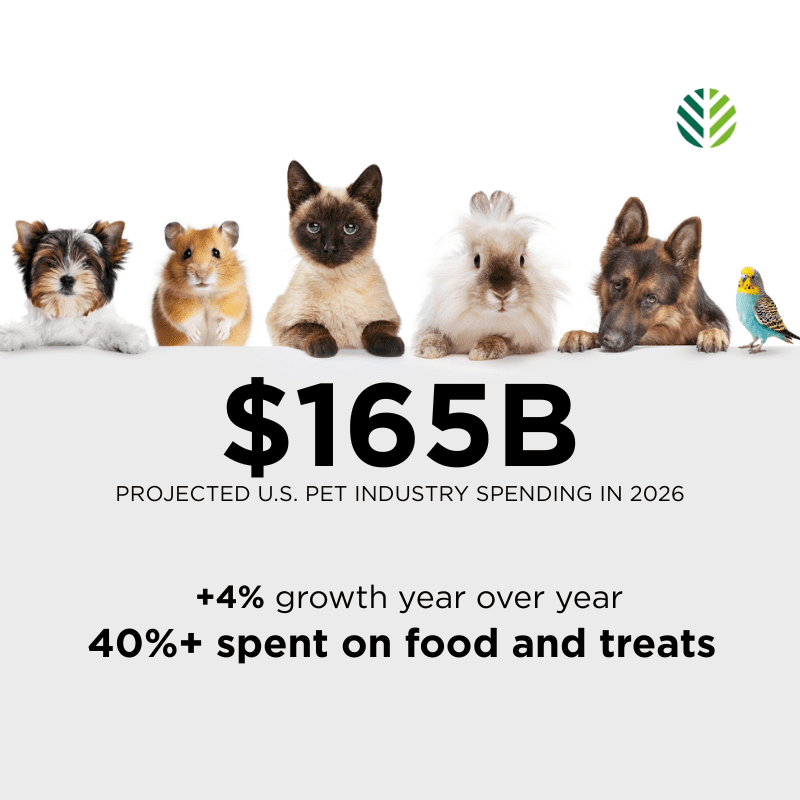
Rising expectations are reflected in record spending, driven largely by nutrition and daily care, according to the American Pet Products Association.
As pets are treated more like people, “good enough” no longer applies. Products are expected to meet the same benchmarks for quality, safety and design as those for people — driving packaging innovation that preserves premium ingredients.
“Modern pet care packaging isn’t just about containing; it’s about preserving taste, texture and nutritional integrity over time — especially given how discerning pets can be and how critical it is for owners to get their diet exactly right.”
— Chuck Tarlton, New Business Development Director, Graphic Packaging International
“IntegraFlute™ bag-in-box packaging combines protection with ease of use,” said Tarlton. “It acts as both the delivery system and the ready-to-use decanter, eliminating the need to transfer food. Designed to be resealable, durable and beautifully branded, it keeps food fresh while fitting seamlessly into the home.”
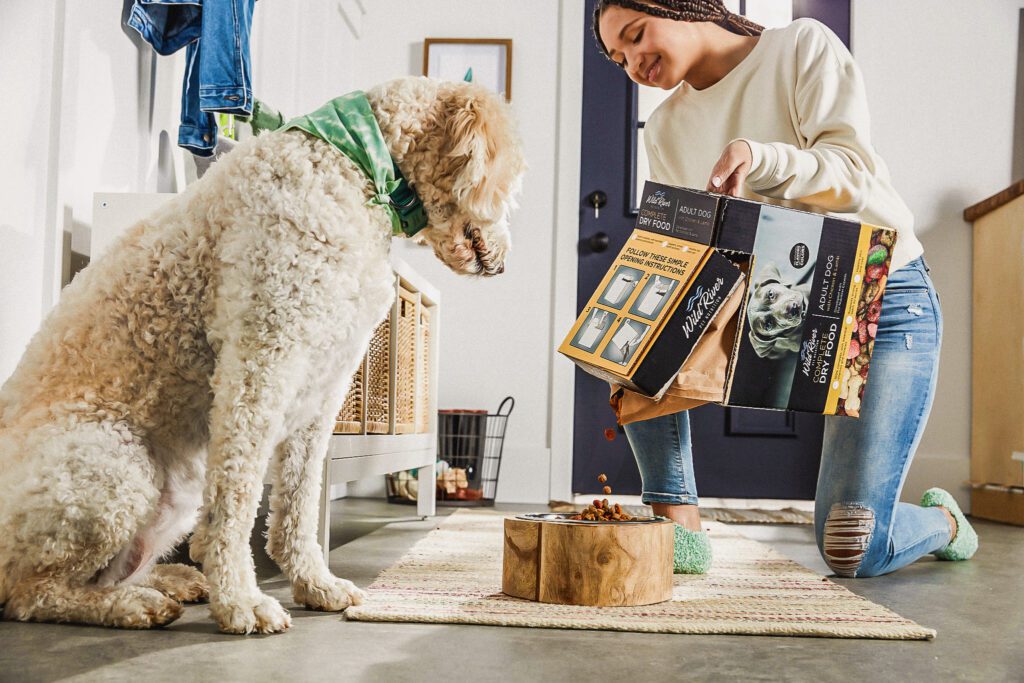
IntegraFlute is an integrated bag-in-box solution for large-format packaging that preserves and protects the product and is easy for pet parents to handle and recycle.
TREND 2
Convenient, On-Demand Pet Care
Like every part of modern life, convenience defines pet care. Services that once required a trip — grooming, veterinary visits, training and fitness — are coming directly to the home through mobile and on-demand models.
At the same time, e-commerce reshaped how pet products are purchased, with auto-ship subscriptions and direct delivery accelerating rapidly. By 2030, e-commerce may account for about one-third of all U.S. pet spending, according to 2025 CapitalOne Shopping Research.
“The COVID pandemic led to a huge surge in online purchase of kibble,” Tarlton said. “People no longer wanted to drag a big bag of kibble home when it could be delivered.”
Traditional formats — like large, heavy bags — were built for in-store retail, not the realities of shipping. In response, packaging is evolving from static formats to multi-functional systems designed for transport and everyday use.
“The pet food bag hasn’t changed much since the beginning, and that bag is not supporting the new channel of e-commerce on its own,” Tarlton explained.
Paperboard innovations, like IntegraFlute or Z-Flute™ heavyweight folding cartons, are engineered for the rigors of e-commerce: strength for transport, with barrier layers that maintain freshness and contain grease. Designed as ship-and-store systems, these formats can move seamlessly from delivery to everyday use, combining protection, convenience and brand presentation in a single solution.
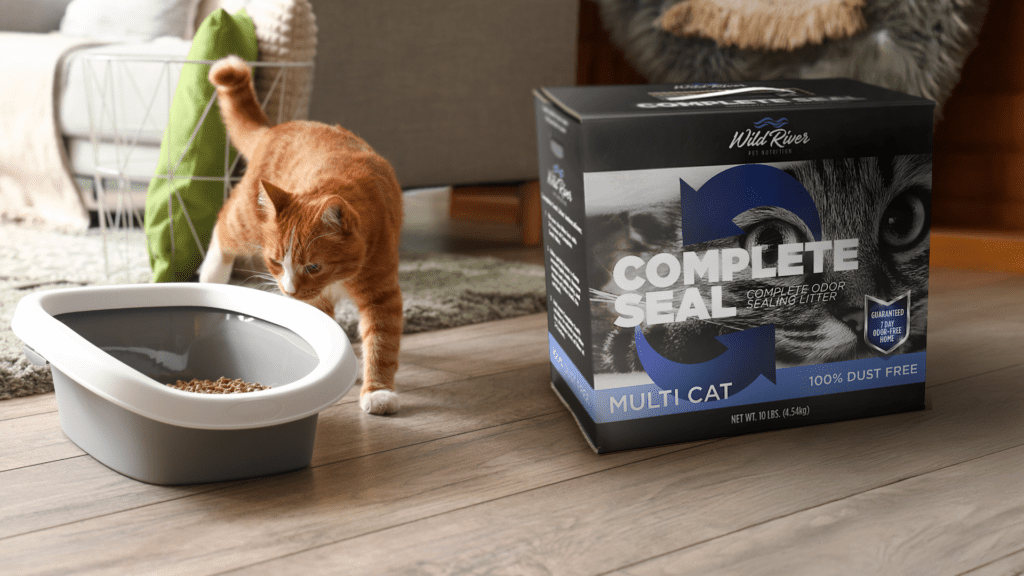
Z‑Flute paperboard offers added structural strength for distribution, supporting the transport of heavier pet products.
TREND 3
The Shift to Sustainable Pet Care
In 2024, a Mars Incorporated study estimated that more than half of people around the world are pet parents. Combined with rising pet spending, demand for premium ingredients and plastic waste, the pet industry’s environmental footprint is under increasing scrutiny.
“Pet owners today are far more conscious of the environmental impact of the products they bring into their homes.”
— Helen Robertson, Brand Manager, Inspired Pet Nutrition
Addressing these challenges requires new approaches to materials, structure and performance — areas where packaging innovation is advancing. Classic Cat, a brand by Inspired Pet Nutrition, transitioned from plastic shrink film to fully recyclable paperboard cartons by Graphic Packaging to align with evolving consumer expectations around quality and sustainability.
“Sustainability was a major driver behind the move to recyclable paperboard packaging because today’s pet owners increasingly want the brands they buy to reflect their own values,” said Robertson. “For Classic Cat, moving away from shrink film allowed us to demonstrate that even an accessible, everyday cat food brand can take measurable steps to reduce environmental impact without compromising on quality or affordability.”
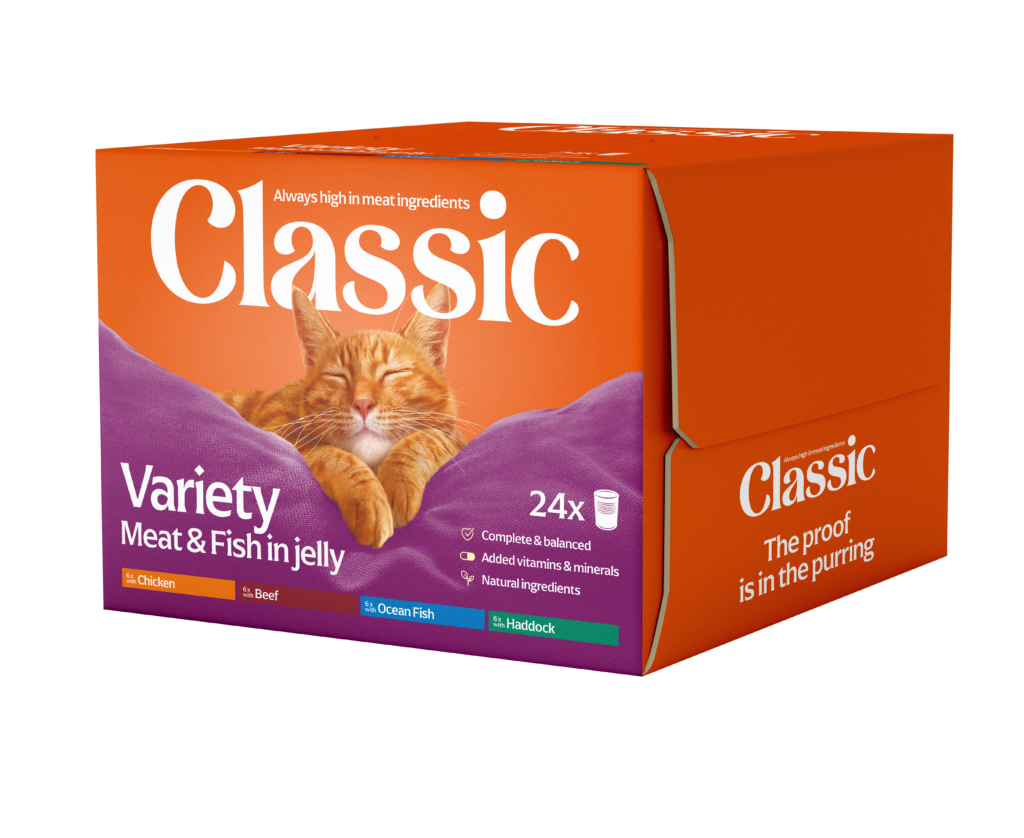
Classic Cat transitioned from plastic shrink film to fully recyclable paperboard cartons with Graphic Packaging, advancing sustainability without compromising everyday quality.
That move reflects a broader business-wide focus on reducing environmental impact and embedding more responsible practices throughout the supply chain. Butcher’s was the first dog food brand to move away from plastic shrink film packaging in 2018, and by adopting recyclable paperboard for multipack canned pet food, they reported the elimination of 856 metric tons of plastic waste between 2019 and January 2024.1
The shift to paperboard also enhances shelf presence and the consumer experience. Packs are easier to stack, store and access, while offering improved protection and recyclability.
The format provides a larger canvas for communicating quality, nutrition and sustainability. As pet owners grow more invested in their animals’ wellbeing, packaging plays a critical role in how that information is delivered.
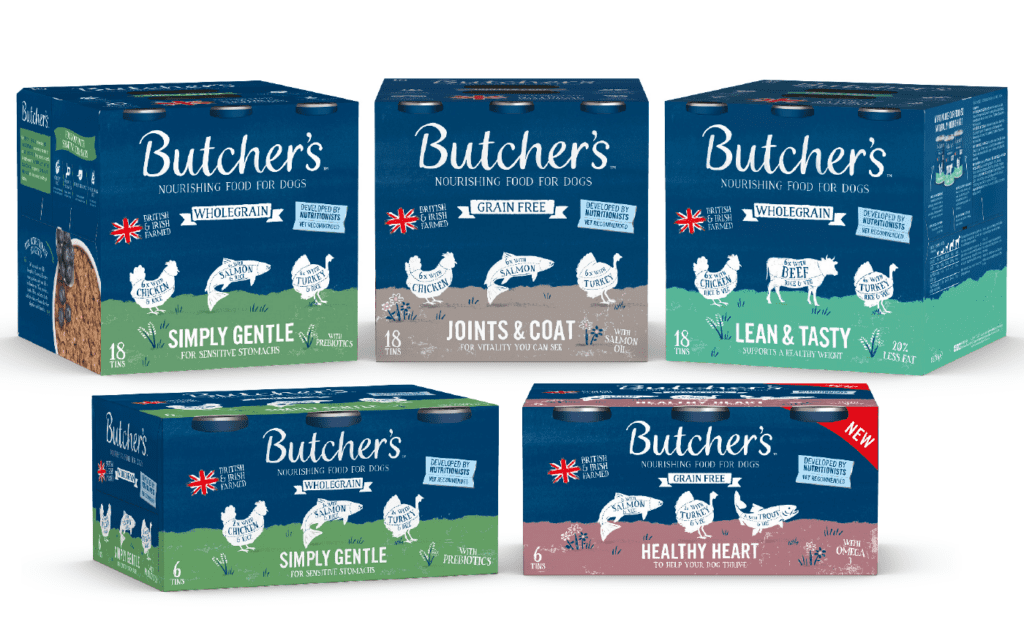
As part of its overarching sustainability plan, Butcher’s sought to change its packaging from plastic shrink wrap to a recyclable, fiber-based solution and turned to Graphic Packaging to help them accomplish this goal.
“Consumers appreciate the reduced plastic and recognize the effort to make more sustainable choices,” said Natasha Bryant, senior brand manager of Butcher’s at Inspired Pet Nutrition. “We expect to see further innovation in recyclable and lower-impact materials, as well as smarter design that supports portion control and ease of use. Importantly, packaging will also remain a key storytelling tool, helping brands communicate quality, transparency and their broader commitments in a clear and credible way.”
1 Based on sales of 6, 12, 18, 24 packs in five years (2019 to 2024) multiplied by the weight of plastic shrink that would have been used per product. Based on weight of 22g plastic bottle.
03
Packaging the Future of Pet Care
What began as companionship thousands of years ago has become a complex ecosystem defined by human-grade quality, on-demand convenience and sustainability, all converging in the same place: the package.
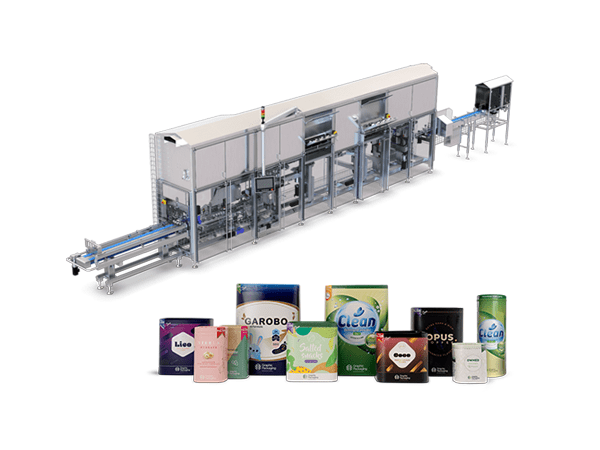
New Graphic Packaging solutions, like Boardio™ and IntegraFlute, are redefining packaging: delivering on the brand promise, safeguarding ingredients, simplifying routines and reducing environmental impact.
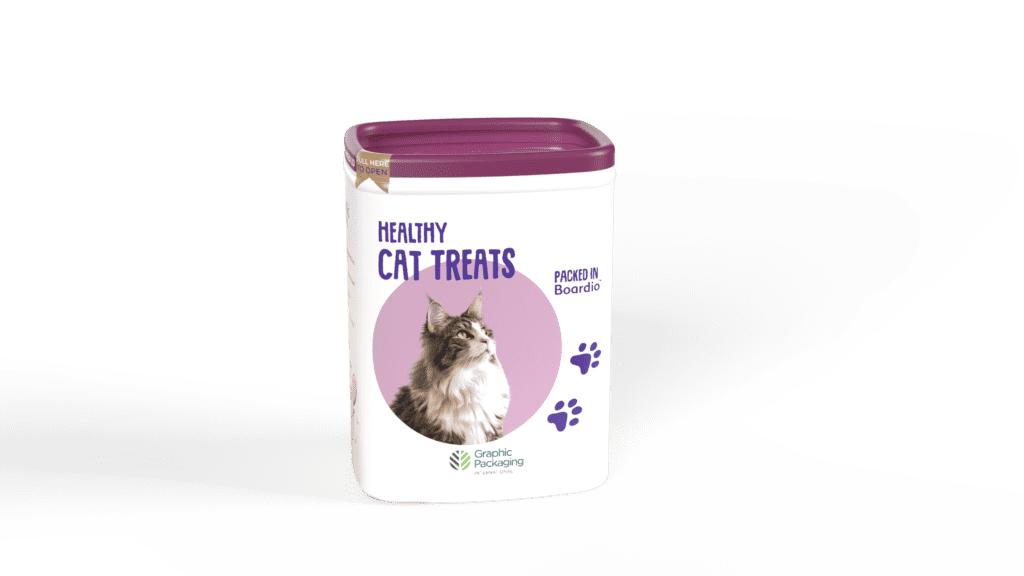
Meet Boardio: the future of pet packaging with an easy-open, re-closable, scoop-friendly design.
In a market built on trust, the future of pet care will be defined not only by what goes into the bowl, but by how it is delivered and protected.
FOLLOW THE WAVE
Culture Wave is a special series exploring the cultural forces shaping packaging in everyday life. Follow the wave: subscribe to The Die Cut newsletter on LinkedIn.
More to Explore
News
The Everyday Appliance (and the Packaging Behind It) That Quietly Reshaped Modern Life
April 21, 2026
Discover how microwave packaging evolved alongside the microwave oven, shifting everyday life and sparking innovation.
News
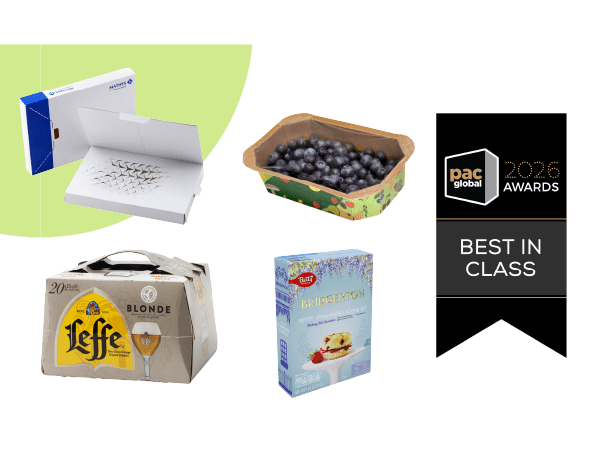
8 PAC Global Awards, One Commitment to Better Packaging
February 24, 2026
Graphic Packaging earns eight PAC Global awards, recognizing sustainable packaging innovation, technical excellence and standout brand design for global brands.
Press Releases
Graphic Packaging Launches Next-Generation Boardio™ Technology with Enhanced Multi-Footprint Capability
December 3, 2025
Graphic Packaging unveils next-gen Boardio™ machine with multi-footprint capability, enabling brands and co-packers to scale sustainable paperboard packaging.