The True Cost of Packaging: Why EPR Makes Recyclability a Business Priority for European Brands
The True Cost of Packaging: Why EPR Makes Recyclability a Business Priority for European Brands
What is EPR?
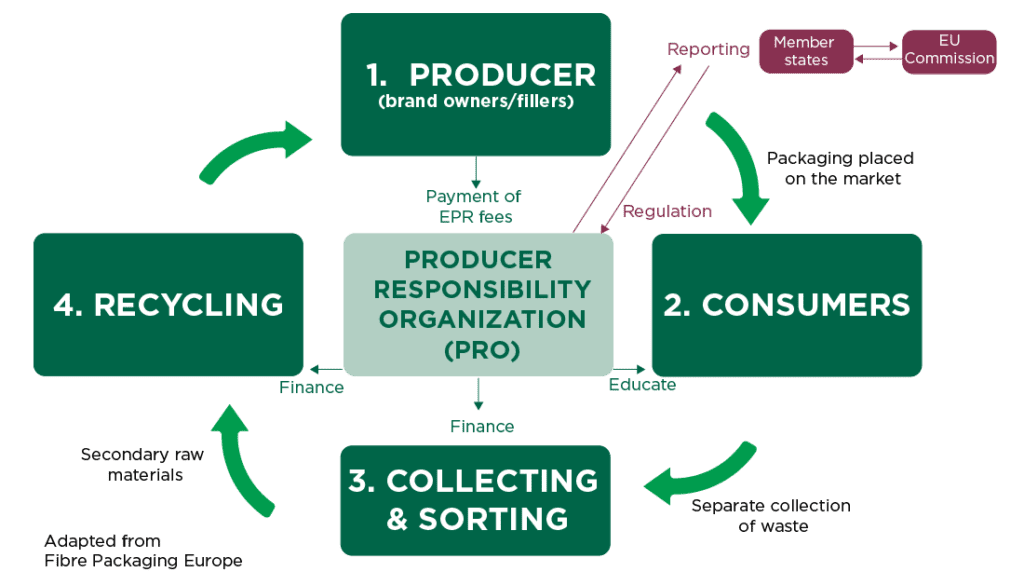
Extended Producer Responsibility, or EPR, is a policy approach that makes producers responsible for the cost of managing packaging after it has been placed on the market. In practice, that means businesses that supply packaged goods may need to register, report packaging data and pay fees that help fund the collection, sorting, recycling and disposal of packaging waste.
The principle behind EPR is often described as “polluter pays”: the cost of dealing with packaging waste moves away from local authorities and taxpayers and towards the organizations that place packaging on the market. For packaging producers, brand owners, importers and retailers, EPR is therefore becoming more than a compliance task. It is increasingly part of the total cost of ownership for every packaging format and therefore places recyclability as a core criterion at the packaging design and selection.
How does EPR work?
Why EPR matters now
Across the UK and Europe, EPR schemes are evolving quickly. The direction of travel is clear: packaging that is easier to collect, sort and recycle is likely to be treated more favorably than packaging that is difficult, costly or impractical to recycle at scale.
In the UK, PackUK has confirmed that packaging disposal fees will be modulated from 2026 to 2029 based on recyclability, using green, amber and red classifications to reflect how well packaging performs against the Recycling Assessment Methodology. Illustrative 2026 fees show this direction clearly, with paper and board estimated at lower rates than plastic and fiber-based composites, while red-rated formats attract higher costs than amber or green equivalents. In the near future, red fees will be double vs. amber fees, discouraging non-recyclable packaging being placed or kept on the market where recyclable alternatives exist.1
In the EU, the Packaging and Packaging Waste Regulation, or PPWR, creates a more harmonized framework for packaging placed on the European market. It requires all packaging to be recyclable by 2030, subject to the secondary legislation and delegated acts, and strengthens the connection between packaging design, recyclability, recycled content, reuse and EPR fee modulation. Although national EPR schemes will continue to operate country by country, PPWR is expected to bring greater consistency to the design rules that sit behind their modulation.
Why EPR looks different across countries
One of the biggest challenges for businesses selling across Europe is that EPR systems are not harmonized. Companies generally need to understand their obligations market by market, because each country may apply different reporting rules, producer responsibility organizations, material categories, fee levels and eco-modulation criteria.
That means the same pack can carry different cost implications depending on where it is sold. For example, a format may require components to be reported separately in one country but not in another, leading to different overall fees.
Here are some examples by country. The descriptions are not exhaustive and it should be noted that many countries’ schemes are becoming more granular.
| MARKET | HOW EPR IS DEVELOPING | WHAT BRAND OWNERS AND FILLERS SHOULD NOTE |
| United Kingdom | The revised packaging EPR scheme shifts more household packaging waste management costs onto producers. Disposal fees are moving towards recyclability-based modulation, with green, amber and red ratings influencing costs. | Paper and board are currently shown in official illustrative fees at lower rates than plastic and fiber-based composites, while less recyclable red-rated formats face higher fees. |
| European Union | PPWR creates a more harmonized framework for packaging design, recyclability, recycled content, reuse and labeling across the EU. | National EPR schemes remain in place, so businesses still need market-by-market compliance planning even if design rules become more consistent. |
| France | France has one of Europe’s most mature EPR systems. Under the Anti-Waste for a Circular Economy (AGEC) law, fees are eco-modulated: bonuses reward positive design choices such as incorporating recycled content, while maluses apply to packs that are non-recyclable or contain elements that disrupt sorting and recycling. | Pack design has a direct impact on cost. Using recycled content can reduce fees, while recycling disruptors such as non-separable components can trigger maluses that can significantly increase the base fee. |
| Germany | Germany requires registration and participation in a dual system, with fees typically set through competing producer responsibility organizations rather than a single public tariff. | Costs can vary by provider, format, volume and recyclability profile, so quotes and accurate material data are important. |
| Italy | Italy’s system is organized around material-specific consortia, with contribution levels differing by material stream and, for plastics, by recyclability category. There are several fiber-based categories, depending on paper content and certificates. | Material choice and design-for-recycling performance can significantly affect the contribution payable. |
| Spain | Spain has a mature system with different categories and includes SUPD single-use plastic fees as part of its EPR system. | Businesses should consider both EPR fees and wider packaging taxes or obligations when comparing material options. |
What this means for packaging decisions
For brands and retailers, the practical message is simple: packaging design decisions made today can influence future cost exposure. EPR fees are not only about the material type and weight of packaging placed on the market. Increasingly, they also reflect whether that packaging can be collected through existing systems, sorted effectively and recycled into useful material streams.
This is where paperboard packaging can play a valuable role. Well-designed paperboard packaging can often support recyclability goals, reduce reliance on harder-to-recycle materials and help customers prepare for more sophisticated EPR fee structures. The opportunity is not simply to reduce compliance risk, but to make packaging choices that support circularity, customer expectations and long-term commercial resilience.
Questions you should be asking
- Which packaging formats do we place on each European market, and how are they classified locally?
- Do we have accurate, up-to-date packaging data by material, weight and market?
- Do we understand the packaging component level at which we need to report?
- Are our packs designed to be collected, sorted and recycled in practice, not just in theory?
- Could a move to recyclable paperboard reduce future cost exposure compared with harder-to-recycle alternatives?
- Are EPR fees as well as applicable plastic tax and single-use levies included in our total cost of ownership calculations when comparing packaging options?
From compliance obligation to commercial consideration
EPR was introduced to make producers more accountable for the packaging they place on the market. But as schemes mature, it is becoming a commercial consideration too. The cost of packaging is no longer limited to materials, converting, filling and logistics. It increasingly includes the cost of what happens after use.
For businesses selling across the UK and Europe, the most resilient packaging strategies will be those that combine compliance awareness with design-for-recycling principles. By considering EPR earlier in the packaging development process, customers can make more informed choices, compare options more accurately and prepare for a regulatory landscape that will continue to reward more circular packaging design.
EPR and associated fees: Case studies
The following tables compare EPR fees, plus SUPD and plastic tax fees (where applicable) for various paperboard packaging formats versus equivalent formats. Costs are based on 2026 fee structures.
Paperboard sushi trays versus PET trays
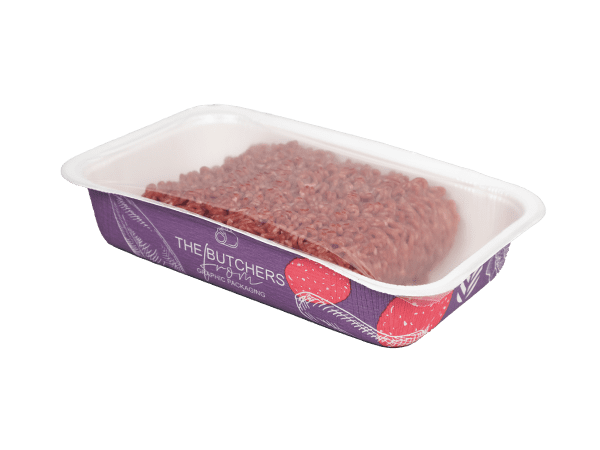
The paperboard sushi tray has either a PE barrier and PET window or parchment barrier and regenerated cellulose window for a single on-the-go portion.2 The paperboard tray with parchment barrier and regenerated cellulose window is classed as plastic-free under the SUPD definition. This table represents fees for five million trays.
| Paperboard Tray with 4.2% PE Barrier | Paperboard Tray with Parchment Barrier | PET Tray | |
| Weight | Paper & Board 23.9g, PET Window 1.3g | Paper & Board 25.4g, Regenerated cellulose window 1.3g | 26.5g |
| UK: EPR + SUPD/Plastic Tax fee per 5m packs | €33,110 | €30,750 | €101,110 |
| France: EPR fee per 5m packs | €35,850 | €34,450 | €101,110 |
| Spain: EPR + SUPD/Plastic Tax fee per 5m packs | €24,750 | €15,450 | €101,110 |
| Netherlands: EPR fee per 5m packs | €10,600 | €2,250 | €161,750 |
PaperSeal™ Pressed tray versus PET tray
PaperSeal™ Pressed is a pressed paperboard tray capable of achieving a secure hermetic seal for modified atmosphere packaging applications. As it uses PaperSeal’s peelable liner, in the UK, the liner is considered to be a separate component and the applicable plastic tax fee for flexible PE is applied. In the UK and Spain, the plastic tax is included in the PET tray fees. This table represents fees for five million trays.
| PaperSeal Pressed | PET Tray | |
| Weight | Paper & Board 21.91g, Flexible PE 2.67g | PET 20.0g |
| UK: EPR + SUPD/Plastic Tax fee per 5m packs | €37,100 | €76,300 |
| France: EPR fee per 5m packs | €31,700 | €84,000 |
| Spain: EPR + SUPD/Plastic Tax fee per 5m packs | €14,150 | €110,900 |
| Netherlands: EPR fee per 5m packs | €2,100 | €122,000 |
Boardio™ paperboard canister versus alternative formats
Boardio is a rigid paperboard canister that offers a replacement for plastic tubs, glass jars, and tin cans. It’s lightweight, delivered flat and highly configurable for low-to-high barrier needs. This table represents fees for five million canisters.
| Boardio Canister | Plastic Tub | |
| Weight | 54.9g (body, base, top, membrane) | 118.0g (tub and lid) |
| UK: EPR fee per 5m packs | €172,650 | €442,000 |
| France: EPR fee per 5m packs | €70,801 | €454,350 |
| Spain: EPR fee per 5m packs | €31,568 | €706,820 |
| Netherlands: EPR fee per 5m packs | €4,667 | €719,800 |


Sushi Tray
PaperSeal Pressed
Boardio
Ready to explore your options?
As EPR requirements evolve, now is the time to review your packaging portfolio and identify where paperboard could help reduce complexity, support recyclability goals, and strengthen total value. Speak to our team to explore packaging solutions designed for today’s market and tightening recycling requirements.
Disclaimer: The fees in the charts are indicative and based on the most representative calculations in those markets to the best of our knowledge. Fees shown for France exclude the additional consumer sales unit CSU-based fee contributions. Fees given here should only be used as an estimate and not relied on for budgeting or investment purposes. These case studies are intended to be used for informational purposes only. While Graphic Packaging uses reasonable efforts to include accurate and up to date information, we make no warranties as to the accuracy of the content and assume no liability or responsibility for an error or omission in the content. It is important to do your own analysis before making any business decisions. You should take independent advice (i.e. legal, financial or risk management) from a professional who is licensed in that area.
References:
- https://www.gov.uk/government/publications/illustrative-waste-disposal-fees-2026-extended-producer-responsibility-for-packaging/year-2-illustrative-waste-disposal-fees-extended-producer-responsibility-for-packaging
- For the PE coated paperboard tray with PET window, the fee contribution of PET window and paperboard components are calculated proportional to their respective weights and material fee category.
Related Resources
Article
EPR in the US: Why Packaging Choices are Becoming a Bigger Business Decision
November 11, 2026
US EPR is growing state by state. Learn how fees, data and recycled content rules are shaping packaging decisions and how paperboard can cut costs.
Article
EPR Fees in Canada: What Paperboard Versus Plastic Could Mean For Food and Foodservice Packaging
September 9, 2026
Explore how Canada’s EPR fees could affect paperboard and plastic food packaging, from material classification and recyclability to compliance and total value.
eBook
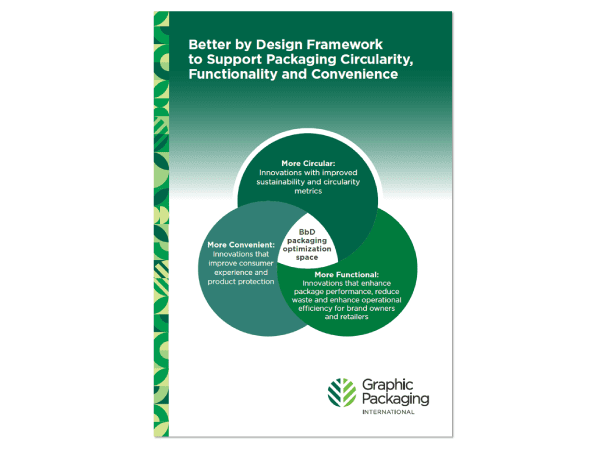
The Better by Design Framework: Supporting Packaging Circularity, Functionality and Convenience
May 18, 2026
Discover how our Better by Design framework helps create packaging that improves circularity, functionality, and convenience while reducing environmental impact across the value chain.