News
Driving Efficiency and Sustainability Across the Packaging Journey
September 24, 2026
The thinking behind Graphic Packaging International’s transportation and logistics initiative and why the movement of materials and packaging is part of the journey to make better packaging
Packaging rarely stays in one place for long. Before a carton reaches a customer, paperboard may travel between facilities; scrap may be collected and returned for recycling; and finished packaging may move through warehouses, distribution networks and delivery routes.
Each mile represents an opportunity to improve efficiency and sustainability. That idea sits at the heart of Graphic Packaging’s initiative to better understand how materials and packaging move through its network and identify practical ways to optimize transportation, serve customer needs and contribute to the company’s broader sustainability objectives. As part of the company’s Better, Every Day sustainability strategy, the initiative applies a continuous-improvement mindset to transportation and logistics, helping evaluate opportunities across its network.
Watch: Graphic Packaging’s head of logistics shares how the company is advancing transportation initiatives and why they matter to its Better, Every Day journey.
Having trouble viewing the video? Watch it on Vimeo.
Every Route Is a Decision
Every transportation decision involves a series of tradeoffs. The carrier selected for a route, the mode used to move freight, the efficiency of a trailer load, and the location of inventory can all influence service levels, costs, operational performance, and emissions. What appears to be a transportation decision often shapes outcomes across the business.
That interconnected nature is what inspired Graphic Packaging’s approach. Rather than pursuing a single solution, the initiative is built around the idea that meaningful improvements often come from addressing multiple parts of the transportation network.
“Customers experience the outcomes of logistics every day, whether that’s product availability, service reliability or support for their sustainability objectives. What they don’t always see are the thousands of decisions behind those outcomes. We want to approach those decisions with greater visibility, better data and a long-term view of how value is created across the network.”
— Domingo Amunategui, Vice President of Logistics, Graphic Packaging
Our Better Logistics initiative is organized around four key areas. Each represents a different lever for improving efficiency and performance, recognizing that transportation outcomes are rarely driven by a single decision or technology.
- The first is carrier selection, partnering with transportation providers that operate modern fleets, maintain strong service standards and are making investments in sustainability.
- The second is mode conversion, identifying opportunities to shift freight to rail, intermodal or other transportation modes where it makes operational and business sense.
- The third focuses on alternative fuels, including pilot programs involving renewable natural gas and electric vehicles in select regions.
- The fourth is network and payload optimization, an ongoing effort to reduce empty miles, increase trailer utilization and improve the efficiency of the transportation network overall.
“The best transportation solutions align with both business and sustainability objectives,” Amunategui said. “That’s why we’re focused on a mix of near-term opportunities that can create value today and longer-term initiatives that help us prepare for the future. Just as importantly, we’re working closely with our carrier partners, whose expertise, infrastructure and willingness to innovate help us explore opportunities we might not otherwise be able to access on our own.”
Taking a Different Route
A route that works well in one region may not make sense in another. Customer requirements, operating environments, infrastructure, distance, and available technologies all influence the decisions logistics teams make every day.
That’s why delivering better packaging logistics is about exploration as much as execution. Across North America and Europe, teams are testing different approaches, gathering data and evaluating how transportation solutions perform in real-world conditions.
KEY PROJECTS
In the Midwest: Exploring Renewable Natural Gas
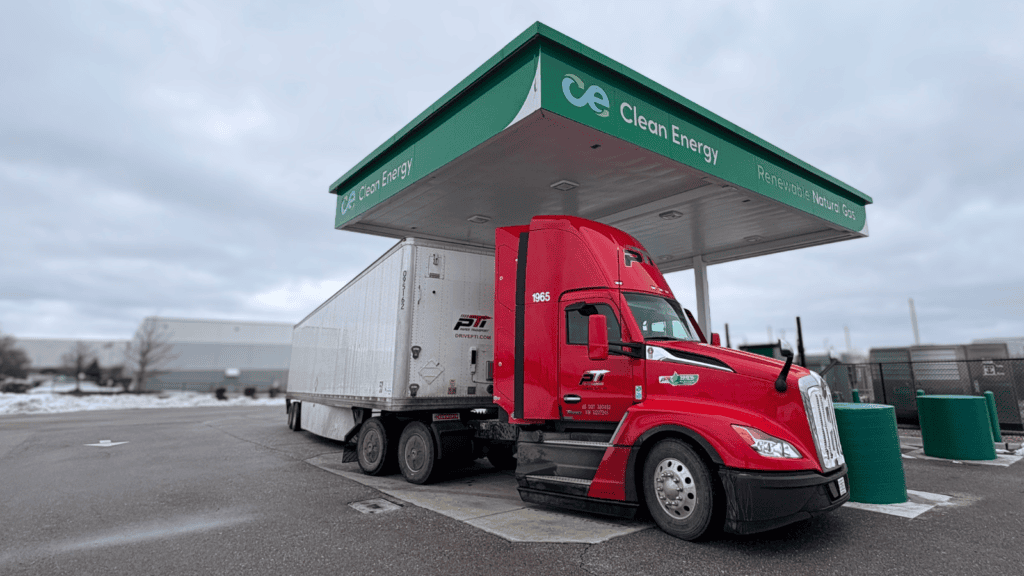
In the Chicago-Kalamazoo corridor, Graphic Packaging is using eight renewable natural gas (RNG)-powered trucks. The routes play an important role in supplying paperboard to facilities and customers while returning recovered fiber for repulping and reuse. Powered by RNG generated from organic waste sources, including landfill gas, the trucks represent an opportunity to reduce transportation-related emissions within an established freight network while maintaining the reliability required for day-to-day operations.
In the Pacific Northwest: Testing Electric Transportation
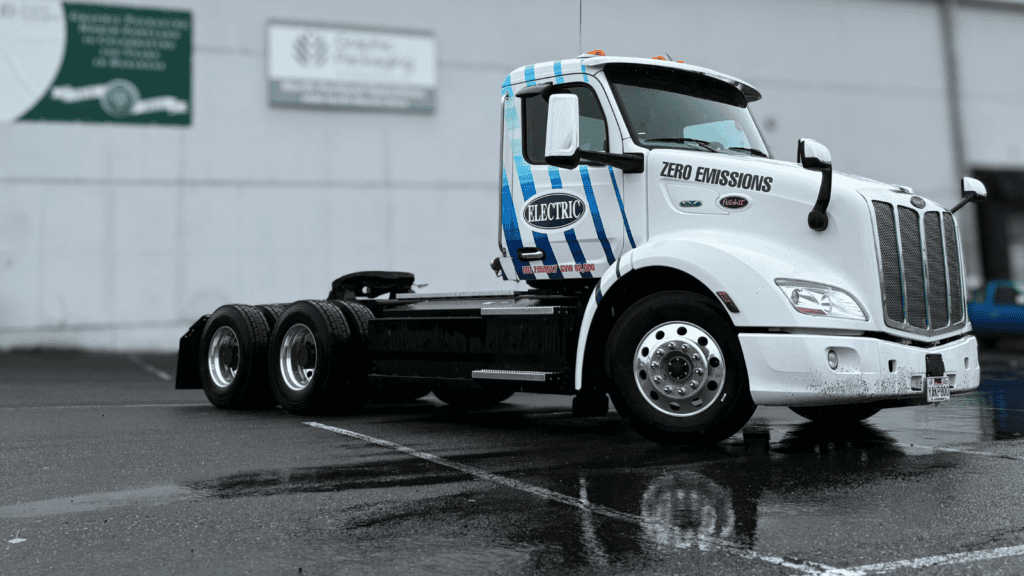
In the Pacific Northwest, two fully electric trucks operate on dedicated, short-haul routes across the Portland area, helping move materials and finished packaging between key Graphic Packaging facilities and customers. The project also required charging infrastructure, underscoring the role strategic partnerships can play in helping new transportation technologies move from concept to day-to-day operations.
In the United Kingdom: Accelerating Electric Freight
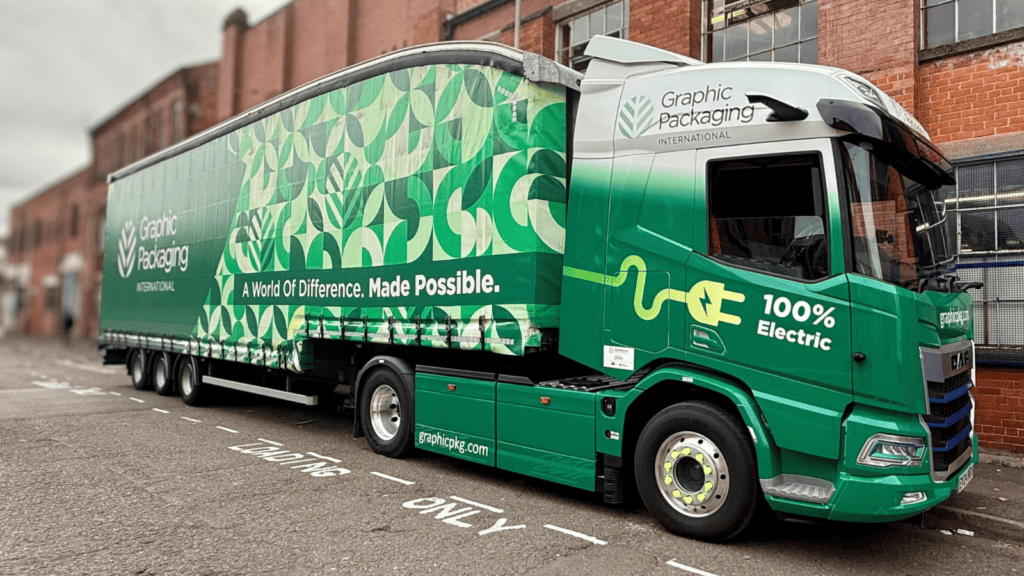
Across the Atlantic, Graphic Packaging is operating two electric heavy goods vehicles (eHGVs) on routes serving facilities in the East Midlands and North East of England. The project builds on the UK transportation team’s longstanding efforts to improve fleet efficiency through better vehicles, data and routing decisions, work previously recognized with a Masternaut Gold Fleet award. The vehicles are part of a broader industry effort exploring how shared charging infrastructure, fleet data and cross-sector collaboration can enable wider adoption of electric freight transportation.
Better Decisions Start With Better Data
-
Lane-Level Visibility
Through its partnership with Breakthrough, Graphic Packaging has strengthened its ability to measure transportation emissions at the lane level, helping identify opportunities for targeted improvements and providing greater visibility into transportation performance. -
SmartWay Carrier Benchmarking
Graphic Packaging participates in the EPA’s SmartWay program as a Shipper Partner. The program provides access to carrier-reported fuel efficiency and emissions data, helping procurement teams evaluate transportation providers and make more informed carrier selection decisions. -
Supporting Customer Reporting Needs
Together, these capabilities help improve transportation visibility and provide customers with more transparent information about logistics-related emissions.
“What stands out about Graphic Packaging’s approach is that sustainability is being managed through the same data-driven lens as operational performance. Today, 91% of its U.S. freight miles are hauled by SmartWay-ranked carriers, compared with a paper and packaging industry benchmark of 79%. That reflects measurable progress in reducing the environmental impact of transportation across its network.” 1, 2
— Heather Ewing, Vice President Enterprise Solutions, Breakthrough
Choosing the Next Route
The timing is significant.
Companies are working to improve the efficiency and resiliency of complex supply chains amidst geopolitical uncertainty, shifting trade patterns, extreme weather events and continuously evolving consumer expectations. Additionally, brands are looking for more accurate transportation and emissions data for sustainability reporting, including tracking Scope 3 emissions.
Packaging design can play a role, too, with solutions that ship more efficiently, improve pallet utilization or reduce the need for secondary packaging.
At the same time, new technologies, alternative fuels, and improved data visibility are creating new opportunities to evaluate and optimize transportation networks. For Graphic Packaging, logistics is about understanding those opportunities today while building the knowledge, experience and flexibility to navigate whatever comes next.
1 Percentage of freight miles hauled by SmartWay carriers is based on truckload carriers within the network.
2 Industry benchmarks are based on Breakthrough Transportation Sustainability Indices.
Related News & Events

Press Releases
Graphic Packaging Holding Company Signs 250-Megawatt Solar Agreement With NextEra Energy Resources to Advance Renewable Energy in Texas
April 29, 2026
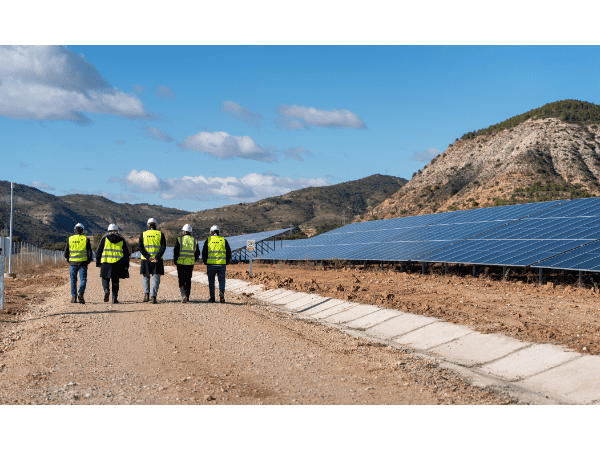
As Graphic Packaging’s largest VPPA to date, the Selenite Springs project in Texas is a strategic component in achieving the Company’s science-based target to reduce global Scope 1 and 2 GHG emissions 50.4% by 2032.
News
Graphic Packaging International Charges Ahead on Renewable Electricity in Europe
March 11, 2026
Graphic Packaging International’s first virtual power purchase agreement (VPPA) helps fuel a more sustainable supply chain for consumer packaging brands.
News
Graphic Packaging Joins SmartWay
May 29, 2025
As a large shipper, Graphic Packaging International supports the transition to
low-carbon emissions transportation. That’s why we’re now a SmartWay Shipper Partner.