Smarter Lines, Faster Growth: The New Era of Beverage Packaging Machinery
Beverage producers are being asked to do more with less: run more SKUs, increase speeds, protect quality, and keep operatives safe — all while navigating tight labor markets and aging assets. In multipacking, seconds of disruption can cascade into scrap, rework, and missed shipments.
This article looks at three headwinds reshaping multipacking in beverage — and the practical automation patterns that can achieve steadier output: faster changeovers and recovery, fewer avoidable stops, simpler training, and more consistent pack quality.
Three Operational Challenges Reshaping Multipacking
1: Labor volatility and skills gaps
2: Demand for flexibility (formats, SKUs, footprints)
3: Aging equipment and the high cost of unplanned downtime
The goal is to engineer out avoidable adjustments, standardize set points, and reduce operator cognitive load so performance is repeatable across crews and weekends — not just on the best shift.
The engineering ask is pragmatic: modular format capability, recipe-driven settings, and changeovers that are fast, verifiable, and safe.
The priority is to reduce chronic causes of stoppage — and shorten recovery when stops do occur.
What Does “Next-Gen Automation” Mean in Multipacking?
In practice, “next-gen automation” in multipacking is less about a single breakthrough and more about designing out everyday friction. The best upgrades help operators run the line safely and confidently, keep performance stable across formats and speeds, and protect pack presentation from infeed to discharge.
- Make performance more repeatable: guided set-up, recipe-driven settings, and built-in checks that prevent “almost right” adjustments.
- Make lines more resilient: gentler product handling at speed, fewer wear points, and compact modular designs that fit real-world footprints.
Done well, these changes don’t just lift overall OEE; they reduce the day-to-day variability that makes lines feel fragile.
Beyond operational metrics, these capabilities also support shelf-ready execution: more consistent appearance, better alignment of branding elements, and fewer defects that create retailer or consumer issues.
Start at the infeed: Automate the “easy stops”
For many plants, the story starts at the infeed. What looks like a minor interruption at moderate speeds can become a chronic drain at higher rates — cartons arriving inconsistently, products not presenting cleanly, operators constantly catching up. Stabilising this front end often removes a surprising share of “easy stops” before teams tackle bigger mechanical changes.
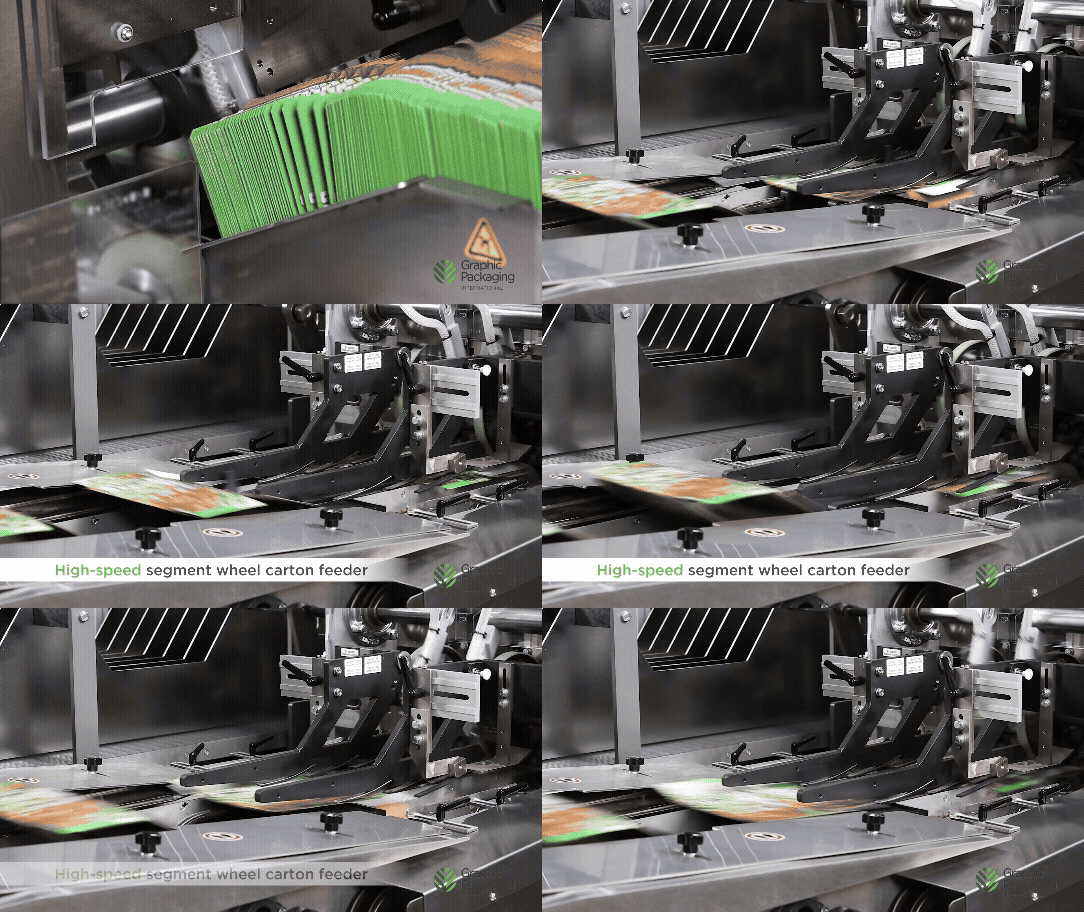
That’s why upgrades often focus on carton presentation and replenishment: moving from operator-fed magazines toward automatic infeed (such as decasing that loads cartons consistently, or robotic pick-and-place where ergonomics and speed make manual handling impractical).
Alongside the mechanics, modern operator screens can guide set-up and changeovers step by step — reducing trial-and-error, damage, and the “it depends who’s on shift” effect.
Graphic Packaging’s segment wheel feeder is a tried-and-true market choice, and a staple feeder style in our machinery portfolio.
Changeovers: From manual adjustment to verification to pushbutton
As SKU counts climb, the best line is the one that returns to stable running quickly and repeatably. At Graphic Packaging, we have moved beyond fully manual changeovers by adding changeover verification: the operator adjusts tooling, but the machine confirms settings before start-up. It also helps to measure changeover as “last good pack to first good pack,” then attack key drivers (adjustments, checks/measurements, cleaning, trial-and-error, and safety steps such as LOTO) with design changes and standard work.
Another innovation we added is automatic (or “pushbutton”) changeover, where servo-driven adjustments execute recipes for common format changes — dimensions, pitch/spacing, lane widths, and other settings that previously relied on experience and manual measurement. Some systems also automate cleaning and prevent start-up until critical positions are validated.
In most factories, the fastest wins come from being honest about where changeover time really goes. Teams map the journey from the last good pack to the first good pack, then focus on the handful of adjustments and checks most likely to create start-up scrap, repeat stops, or a slow crawl back to rate.
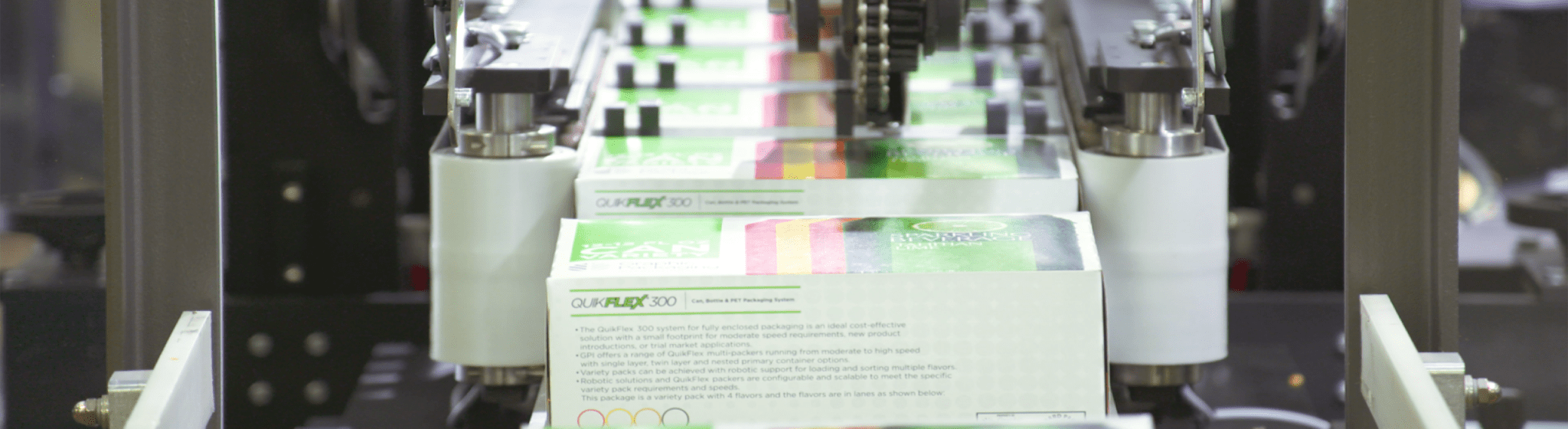
Filler speeds are increasing. Technology is advancing. And the need to stand out on the shelf has never been greater. That’s why we developed the QuikFlex™ 2100G4. Capable of speeds up to 500 ppm, it is our fastest small-format packaging machine to date.
Smarter product control: orientation, motion, and inspection
Orientation and grouping control are increasingly used to stabilize pack build and improve shelf execution. Camera-based detection paired with controlled motion can align primary-pack graphics and standardize group geometry. Operationally, that means fewer downstream issues (misfeeds, skewed packs, inconsistent closures) and less time spent adjusting for “soft” variation.
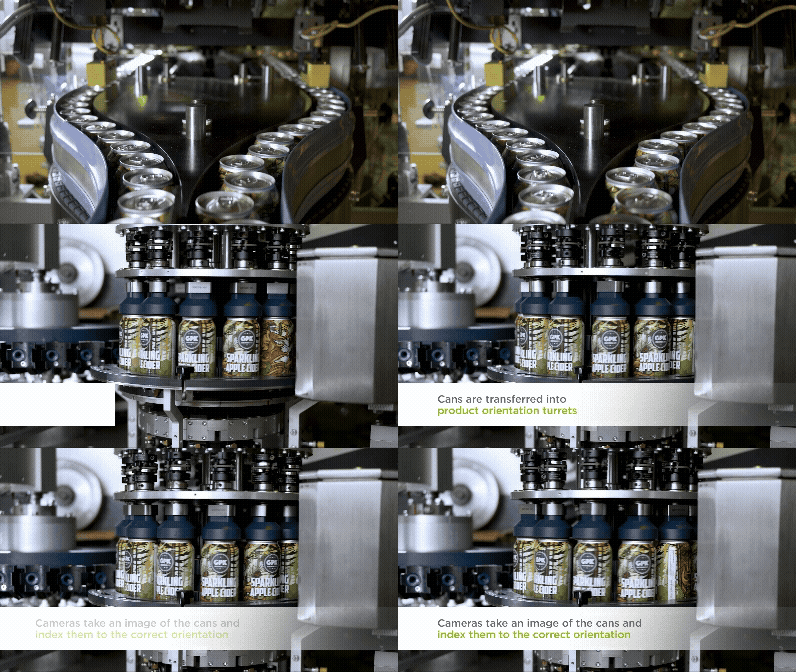
AutoClip™ KC1600 is a high-speed machine that applies our patented KeelClip™ solution. It orients and fixes the primary cans to the center panel, creating a block-like structure that provides inline stability that other clip styles in the market cannot deliver. It’s a perfect alternative to plastic rings and shrink film.
Linear track transport (independently controlled movers rather than a single chain) can reduce product disturbance during pitch changes and gentle grouping. For engineers, the value is not only throughput: independent motion can simplify format handling, reduce mechanical wear points associated with long chains, and enable tighter control strategies that help maintain rate across a wider operating window. Linear track transport (independently controlled movers rather than a single chain) can reduce product disturbance during pitch changes and gentle grouping. For engineers, the value is not only throughput: independent motion can simplify format handling, reduce mechanical wear points associated with long chains, and enable tighter control strategies that help maintain rate across a wider operating window.
AutoClip™ EBB1200 and EBR1200 machines that apply our EnviroClip™ pack to round and square-neck bottles offer linear pack transport, delivering excellent control.
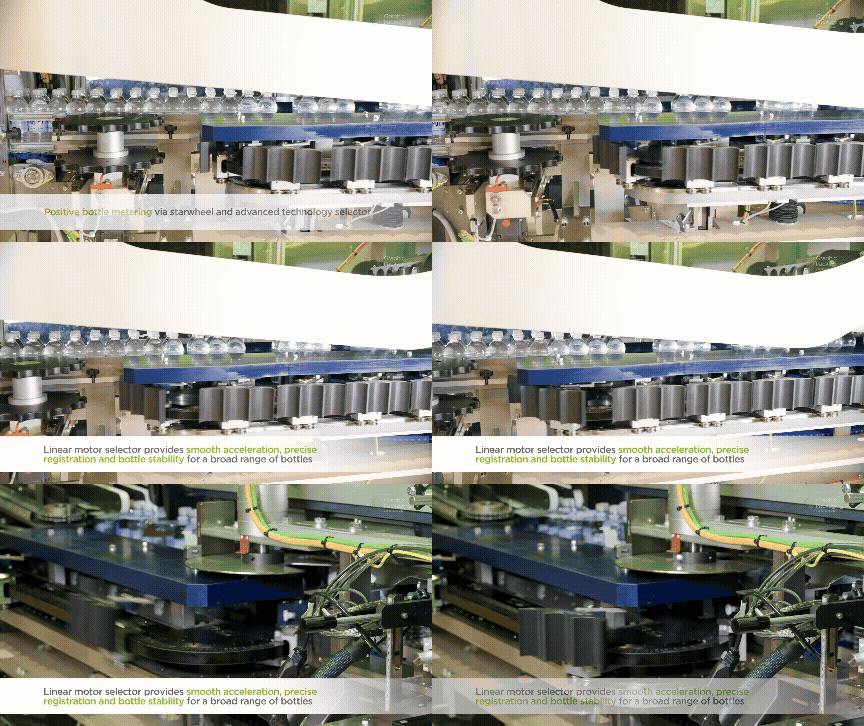
Vision-based inspection is moving beyond rigid, high-contrast “go/no-go” checks. Newer sensors and machine-learning approaches can work with richer graphics and tougher lighting conditions, helping detect unclosed packs, damaged cartons, or missing components without designing large contrast targets into the package. The payoff is fewer defects escaping downstream — and fewer nuisance rejects that slow the line.
Lock detection is an optional feature on our wrap and basket machinery to detect errors before they reach the end of the line and palletization.
Training and maintenance: digitize knowledge and move from reactive to planned
In a high-turnover environment, training can’t depend on binders and a handful of experts. Many plants are shifting to digital operator support: searchable manuals, interactive 3D parts catalogs, and step-by-step changeover checklists with short video clips. These tools can also log completion and time-to-perform, turning training into measurable improvement rather than an informal handoff.
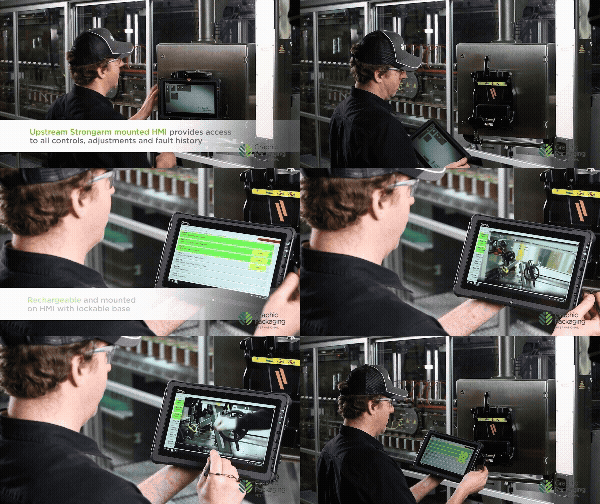
Graphic Packaging’s Preventive Maintenance Program supports brands by replacing wear parts before failure, and consistent calibration/inspection help shift maintenance from emergency response to planned, budgeted operations.
When teams compare “run to failure” versus planned service, our PMP program difference shows up as avoided downtime and fewer cascading disruptions. In some real-world comparisons, planned maintenance has been associated with uptime gains of a few percentage points (for example, ~5%). The exact number varies, but the principle holds: preventing a stop is usually cheaper than recovering from one.

Robotics: scale variety without rebuilding the whole line
Robotic cells are increasingly used where variety and ergonomics collide — especially for mixed packs, promotional builds, and end-of-line tasks. With 3D vision and improved picking algorithms, robots can handle less structured presentations (for example, products staged in trays) and make better decisions about where and how to pick.
- Variety packing and mixed-SKU collation.
- Product laning and grouping to support downstream multipackers or promotional inserts.
- Palletizing, depalletizing, and repalletizing — often the fastest route to labor relief at end-of-line.
AI in packaging operations: fewer false alarms, better defect detection
AI tends to earn its keep in the unglamorous places: inspection decisions and the judgement calls that either keep a line flowing or fill it with nuisance rejects. Rather than “teaching” a camera every defect scenario across changing SKUs and lighting, machine-learning models can classify good versus bad packs more robustly — catching real problems earlier while reducing false alarms. It can also help with edge cases, such as telling a harmless crease from a true closure fault, improving both quality and throughput.
What to prioritize when modernizing a multipacking line
- Design for repeatability: Does the line reduce manual set points, embed verification, and make “first good pack” faster and more predictable?
- Make training measurable: Are work instructions digital, role-based, and easy to follow under time pressure — and do they capture completion and time-to-perform?
- Protect overall equipment effectiveness (OEE) by preventing avoidable stops: Where are the top recurring stoppages today (infeed, changeover, quality rejects), and which ones can be engineered out?
- Plan for constraints: Can the solution fit existing footprints and integrate with upstream/downstream equipment without forcing a full layout redesign?
- Future-proof formats: Are new pack styles and sizes field-retrofittable with minimal downtime, and is the platform modular enough to evolve?
- Use data intelligently: Will vision/AI reduce false rejects and catch defects earlier, and can maintenance shift from reactive to planned using usage and condition signals?
Ultimately, Graphic Packaging’s multipacking lines are designed for operational excellence — more SKUs, faster cycles, tighter labor markets, and rising quality expectations. Flexible automation and next-generation controls won’t remove complexity, but they can make it manageable: fewer failure points, faster interventions, and more stable output shift after shift.
Ready to take the friction out of your multipacking line?
If you’re looking to reduce unplanned stops, speed up changeovers, or expand pack and SKU flexibility without compromising quality, we can help. Get in touch to talk through your current line constraints and objectives — together we’ll map practical upgrade options and the fastest path to more stable, repeatable output.
Related Resources

Article
Drink Different: The Bold Beverage Trends Taking Over 2026
February 9, 2026
Explore how 2026’s beverage trends blend nostalgia, heritage ingredients, and modern innovation — from cascara brews to artisanal hot drinks — shaping meaningful, story‑driven drinking experiences for today’s consumers.
eBook
Making the Transition to Paperboard Multipacks for Beverages
June 26, 2023
Meet environmental concerns head-on by exploring the benefits of paperboard alternatives to plastic for beverage multipacks.
Article
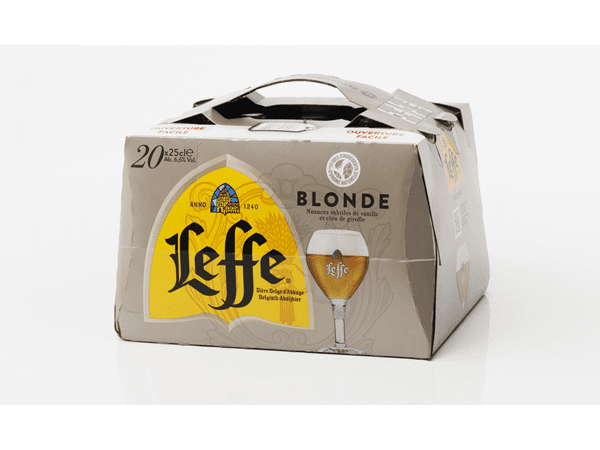
Advancing Innovation and Circularity in Beverage Packaging: The Award-Winning Leffe Beer Multipack
December 2, 2025
The award-winning Leffe beer multipack: Advancing innovation and circularity in beverage packaging.